
AI POV Video Generator. Five first-person shots through someone else's eyes.
Say whose eyes to see through, and where and when, and Treza storyboards five first-person shots, renders them on Seedance 2.0, titles each one, and cuts them over music. You get a 20-second vertical POV short.
Everything on this page was made on Treza.
The viewer is the character
Every shot is seen at eye height through the character's own eyes. Their hands, arms, or tools can be in the lower frame; their face and body never are.
A five-shot arc
The storyboard walks through one stretch of a life in order: waking or arriving, getting ready, stepping out into the world, the main moment, and a closing beat. Each shot is four seconds.
A title on every shot
Each shot gets a short title and a line in the second person, and the first one reads POV and says who you are and when. They are burned onto the cut at each shot's own cut point.
The right clothes and tools for the time
The storyboard is told to match clothing, tools, buildings, and people to the place and the year, with nothing modern in a historical scene, and to keep the same hands and gear in every shot.
Music that fits the era
The storyboard also writes a prompt for an instrumental bed, Lyria generates it, and the Sequence mixes it under the five shots. There is no narration.
Tension, not gore
Battle and danger are written as tension and scale, never graphic injury, so a short about a siege or a storm stays postable.
Fix one shot, not the whole short
Every shot is its own node on the canvas. Rerun the one that broke the point of view and the other four, the music, and the titles stay as they are.
A POV short this template made
One morning as a Roman legionary in 52 BC, in five first-person shots. The face is never shown, each shot carries its own title, and the cut runs over a music bed.
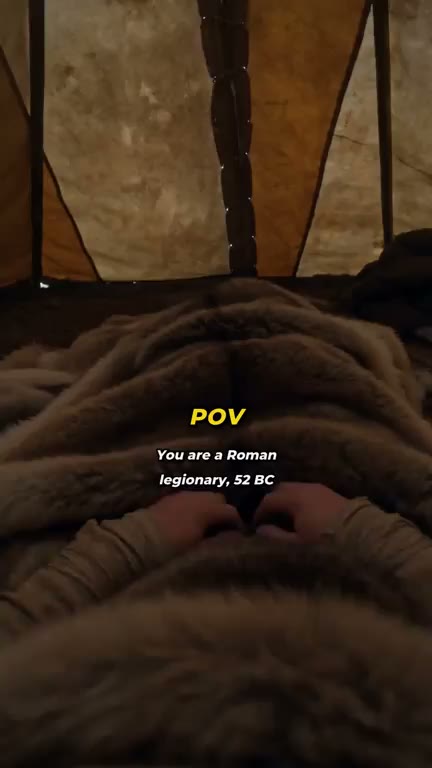
It opens on who you are
The first title reads POV and names the viewer and the year.
POV Short
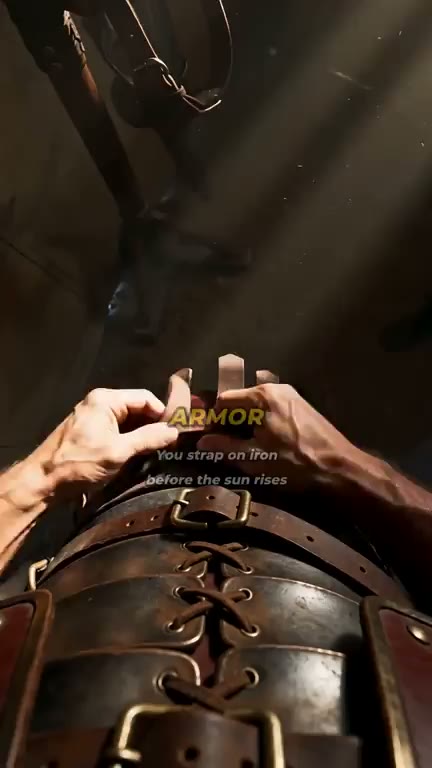
Hands, never a face
Getting ready and stepping out, seen at eye height.
POV Short
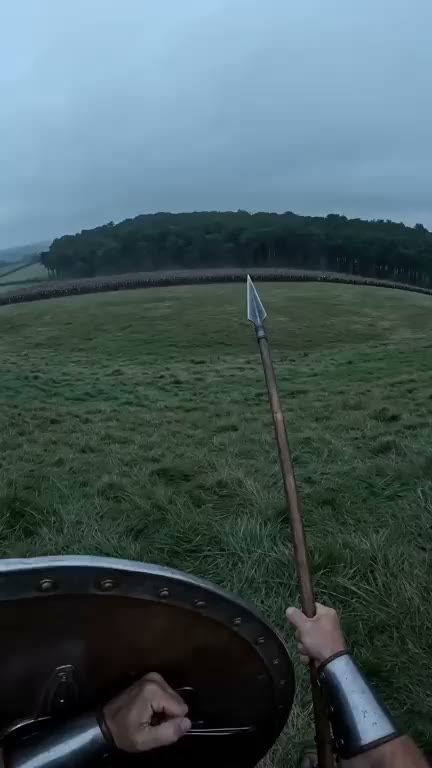
The main moment, then the close
The line across the valley, then the aftermath.
POV Short
From idea to finished video
- Step 01
Say whose eyes
Open the POV Short template and write who the viewer is, where, and when, like a lighthouse keeper in a storm in 1890.
- Step 02
Pick a version
Standard renders the five shots on Seedance 2.0. The budget version renders the same five on a lighter video model with the same titles and music. The price is shown before it runs.
- Step 03
Run it
The storyboard, the five shots, the music, the cut, and the titles run in one go, and the short comes back in the chat.
- Step 04
Check it, then post
Watch for a shot that shows a face or a modern object and rerun it. A generated scene from history is an illustration, so say it is AI when you post.
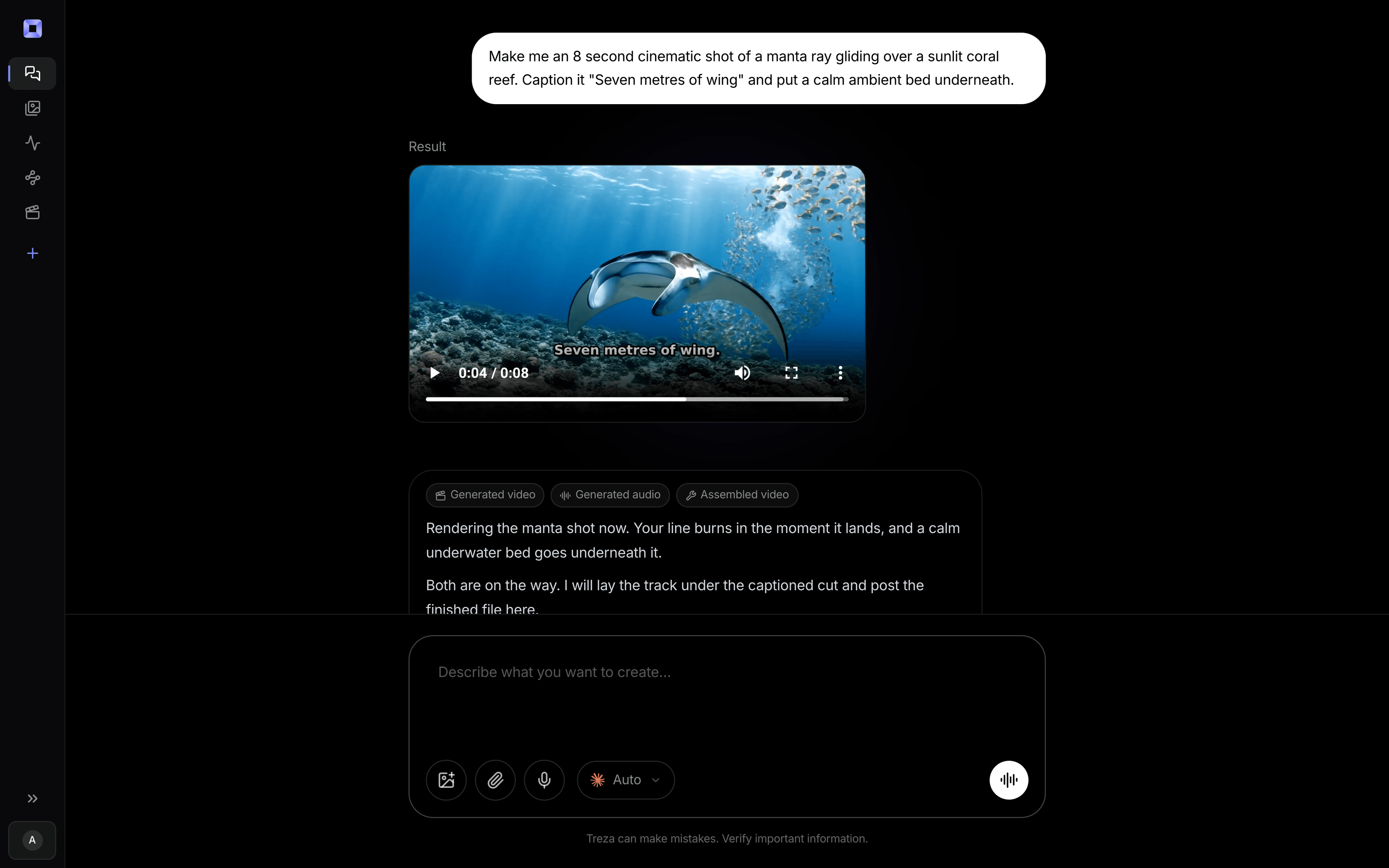
One sentence, in the words you would use out loud.
What people build with it
POV: you wake up in another century
A Roman legionary before a battle, a medieval baker before dawn, a sailor on a tall ship. The format that made first-person history a genre on Shorts.
A day in a job nobody sees
A deep-sea welder, a lighthouse keeper, an astronaut on a spacewalk. Five shots take the viewer through one shift.
Fantasy and science fiction POV
A dragon rider at take-off, a colonist's first morning on Mars. The same five-shot arc works in a world that never existed.
History lessons from the inside
A teacher can open a lesson with twenty seconds inside the period, then pause on each shot and ask what the class notices.
Places as a first-person walk
A night market, a mountain monastery, a rainy harbour town. Name the place and the time of day and the viewer walks through it.
A daily POV series
Keep the format and change the era. One sentence a day is one short a day, each titled the same way.
AI POV video generator, answered
What is an AI POV video generator?
An AI POV video generator makes a first-person video, seen through a character's own eyes, from a text description. On Treza, the POV Short template storyboards five first-person shots from one sentence, renders them on Seedance 2.0, burns a title onto each, and cuts them over music into a 20-second vertical short. Read the historical POV guide
Are AI POV history videos accurate?
They are illustrations, not records. The storyboard asks for clothing, tools, and buildings that match the place and year, but a video model can still get details wrong. Check each shot, and label the video as AI-generated when you post it.
Why do I never see the character's face?
Because the viewer is the character. The storyboard keeps the camera at their eye height and allows only their hands, arms, or tools into the frame, which is what makes the format read as POV.
Is there a narrator?
No. The titles on each shot carry the story, over music. To add a voice, open the pipeline on the canvas and add a text to speech node, or use the Story Video template for a narrated video.
Do the hands and clothes stay the same between shots?
The storyboard asks for the same hands, sleeves, and gear in every shot, but each shot is rendered separately from text, so small differences happen. Rerun the shot that drifted.
Can I change the titles?
Yes, on the canvas. The titles reach the Captions node as a list in shot order. Wire your own list in place of the Shot titles node and rerun Captions, and the video is retitled without rendering the shots again.
How much does it cost to make a POV video with Treza?
Treza runs on prepaid credits with no subscription. Each generation is charged at the model's own rate from your balance, and a failed generation costs nothing. A typical video generation settles around $1.06, and credit packs start at $5 and never expire.
Can I call this as an API instead of using the canvas?
Yes. Every pipeline can be published as a versioned HTTP endpoint. Call the typed /invoke endpoint with JSON in and JSON out, or point any OpenAI SDK at the OpenAI-compatible endpoint. Swap a model on a node later and the API your product calls does not change.
Do I need to know how to edit video?
No. Start from a template, change the topic, and run it. If you do want frame-level control, the timeline editor is there with multi-track video and audio, per-clip trims, fades, and volume, but nothing about the automated path requires opening it.
Related tools
AI history video generator
Narrated history Shorts, one era or event per episode
AI vlog generator
Selfie vlog clips of a character you describe, spoken and captioned
AI shorts generator
Vertical short-form video for TikTok, Reels, and Shorts
Faceless video generator
Faceless YouTube and TikTok channels that publish on a schedule
See every tool, compare the models, read what an AI video pipeline is, or earn 30% sharing these tools.
Your first video is one prompt away.
Generate your first video, image, or draft today. Prepaid credits, no subscription.