
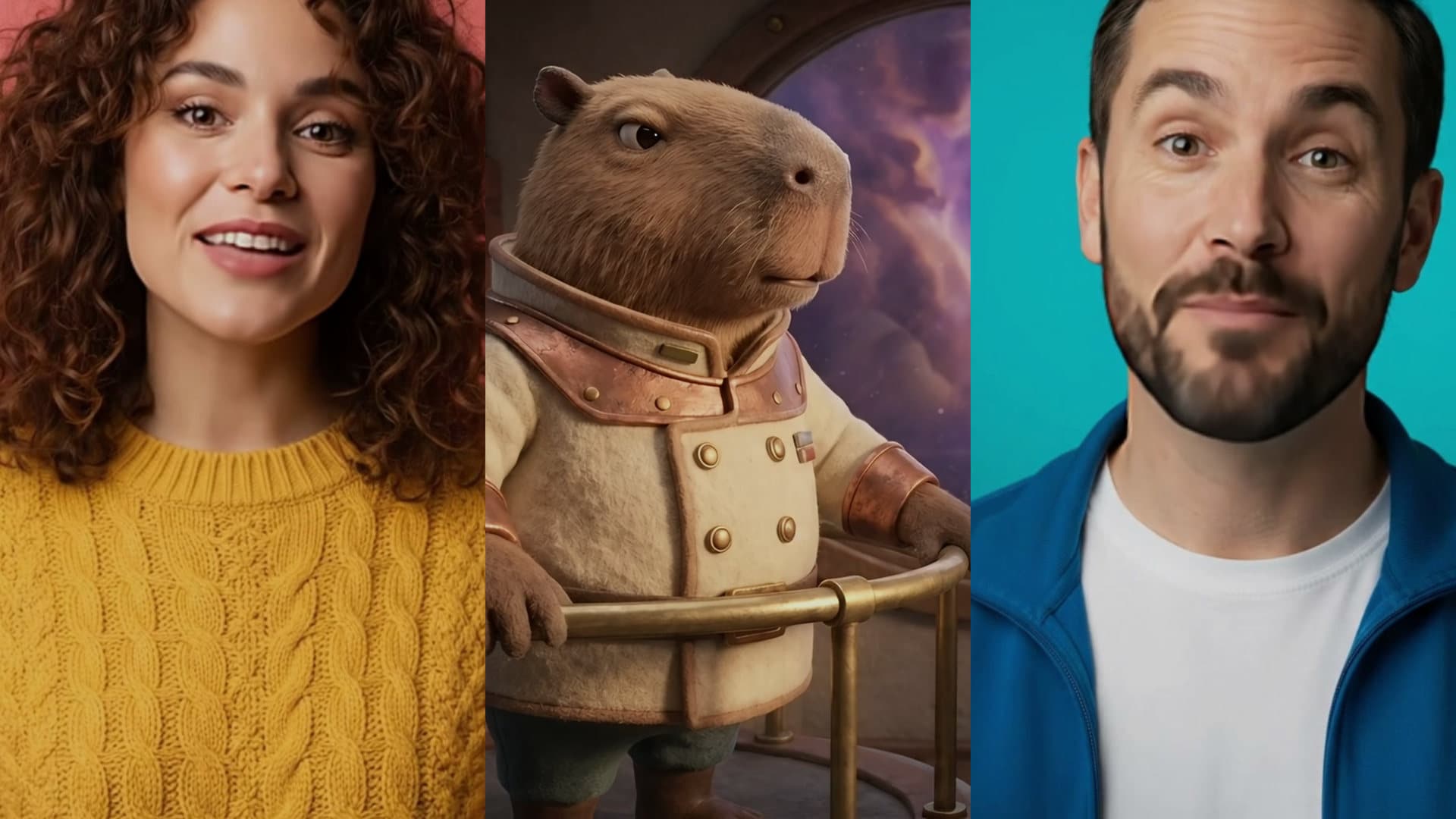
Normalize Audio. Every take at the right loudness.
Measured in LUFS, brought to your target, and never clipped.
Bring this to -14 LUFS for Shorts and TikTok.Open in chatEverything on this page was made on Treza. See pricing
Measured first
Loudness, true peak and range, read before anything moves.
Presets for where it posts
Shorts and TikTok at -14, podcasts at -16, broadcast at -23.
Or your own number
Any target from -40 to -5 LUFS.
Nothing clips
A true-peak limiter keeps the peaks under your ceiling.
The picture untouched
Only the sound is processed. The video is copied as it is.
Every number back
What it measured, the target, and the gain in dB.
Three takes, one level
The bars are the sound before and after. The numbers are measured.
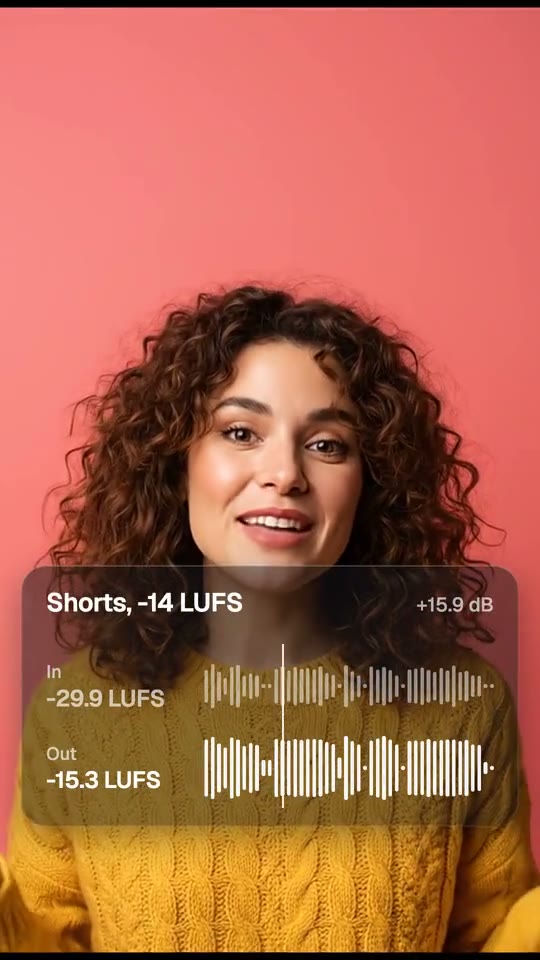
A quiet take, for Shorts
In at -29.9 LUFS, out at -15.3.
Audio Normalize
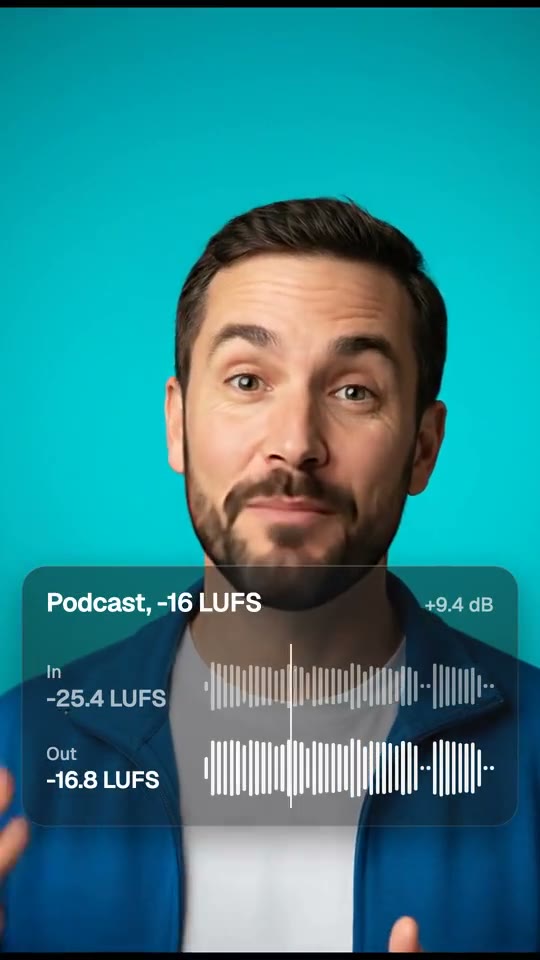
Matched for a podcast
In at -25.4 LUFS, out at -16.8.
Audio Normalize
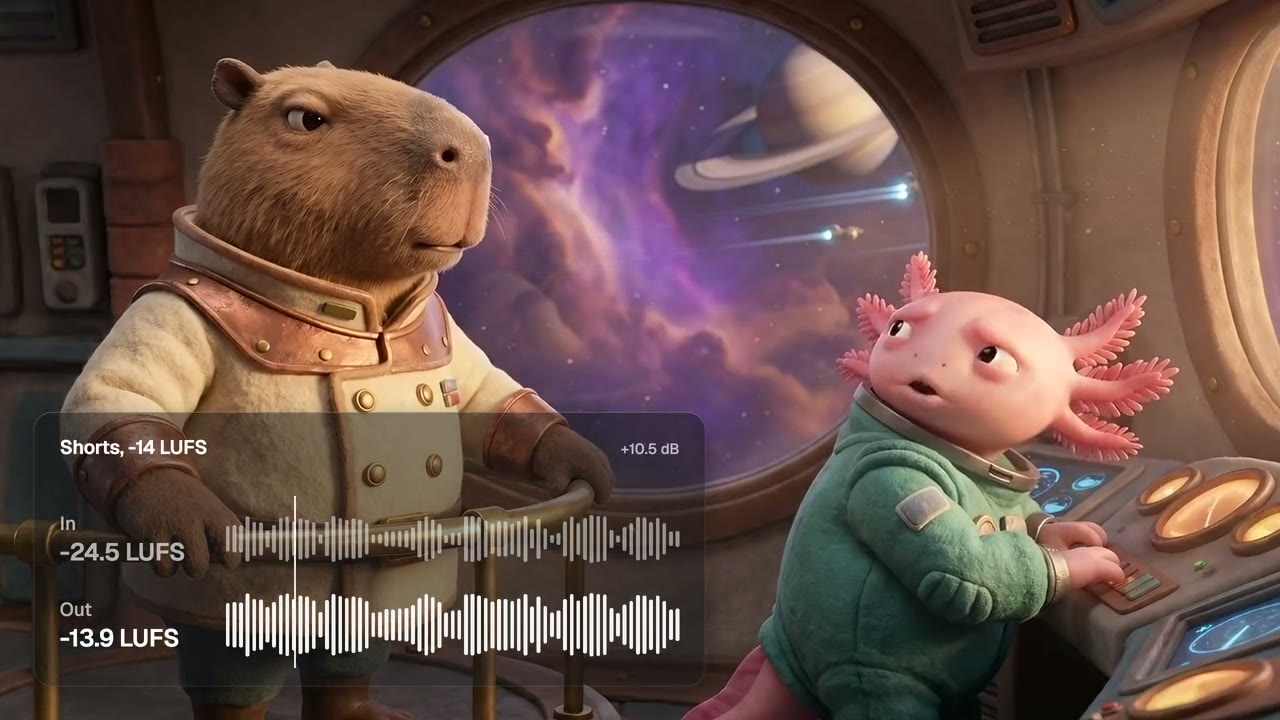
A whole scene, for Shorts
In at -24.5 LUFS, out at -13.9.
Audio Normalize
From idea to finished video
- Step 01
Attach the take
A video or an audio file, in chat or on the canvas.
- Step 02
Say where it goes
Shorts, a podcast, or a number in LUFS.
- Step 03
Get it matched
The same video back, at the new level.
- Step 04
Run it last
After the music mix, so what it measures is what posts.
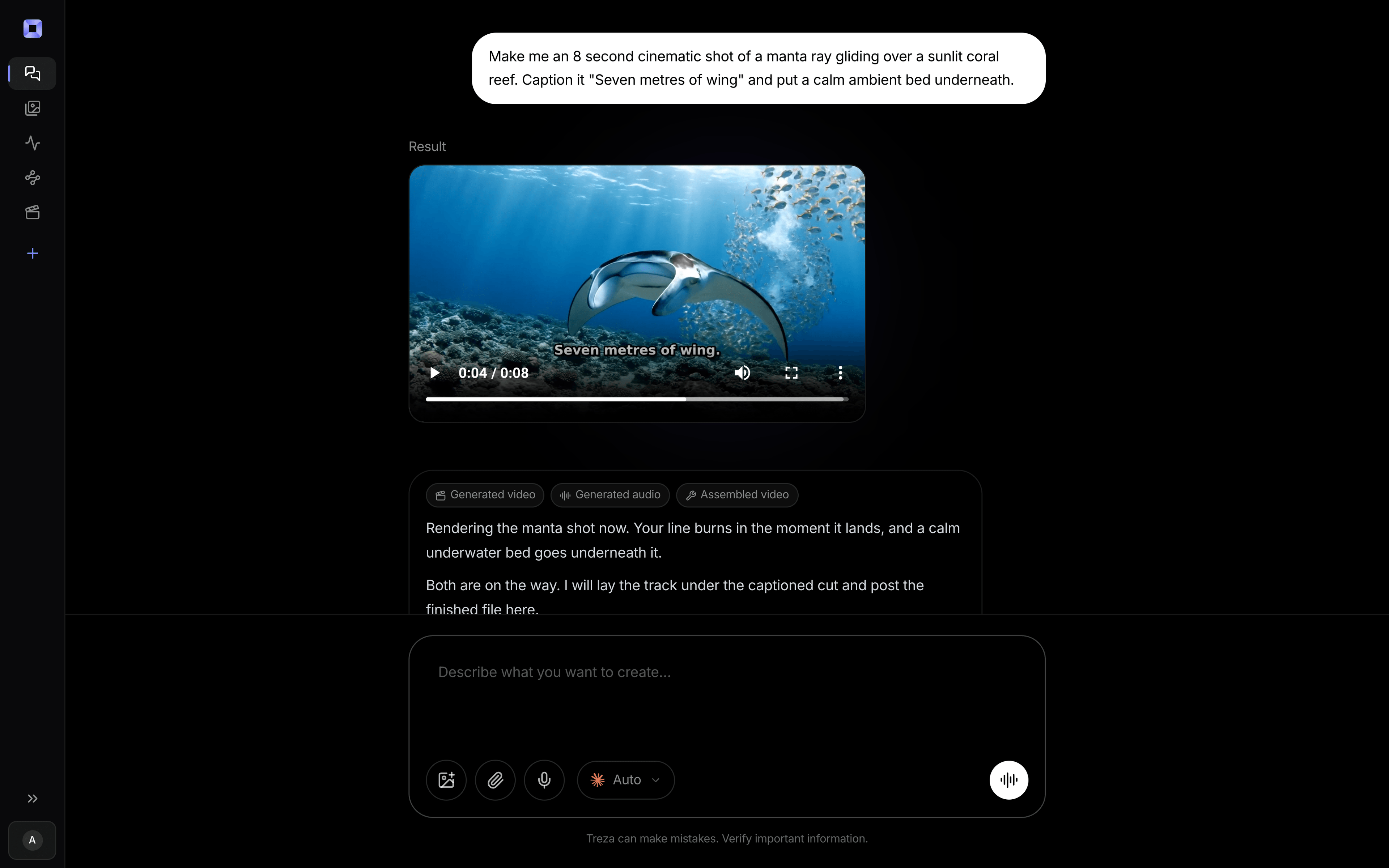
One sentence, in the words you would use out loud.
What people build with it
Shorts, Reels and TikTok
Land at -14 so the app leaves your level alone.
Podcast episodes
-16 LUFS, where podcast feeds sit.
A series that matches
Every episode at one level, no jump between them.
Quiet phone takes
Bring a soft voice up without clipping it.
Voiceovers
Narration at the same level as the rest of the cut.
Broadcast dialogue
-23 LUFS for a broadcast delivery.
Normalize audio, answered
What is LUFS?
A measure of how loud a track sounds over its whole length, which is what the platforms match to.
What loudness should I use?
-14 for Shorts, Reels and TikTok, -16 for podcasts, and -23 for broadcast dialogue.
Does it change the picture?
No. The picture is copied as it is, and only the sound is processed.
Will it flatten my music?
Raise the loudness range toward 20 and it keeps more of the swing between soft and loud.
How much does it cost to make a normalized video with Treza?
Treza runs on prepaid credits with no subscription. Each generation is charged at the model's own rate from your balance, and a failed generation costs nothing. A typical video generation settles around $1.06, and credit packs start at $5 and never expire.
Can I call this as an API instead of using the canvas?
Yes. Every pipeline can be published as a versioned HTTP endpoint. Call the typed /invoke endpoint with JSON in and JSON out, or point any OpenAI SDK at the OpenAI-compatible endpoint. Swap a model on a node later and the API your product calls does not change.
Do I need to know how to edit video?
No. Start from a template, change the topic, and run it. If you do want frame-level control, the timeline editor is there with multi-track video and audio, per-clip trims, fades, and volume, but nothing about the automated path requires opening it.
Related tools
Remove background noise from video
Cleaner dialogue and platform-ready loudness on any recording
Remove silence from video
Tightening a talking take into a jump cut
AI video caption generator
Word-timed captions burned into every video
See every tool, compare the models, read what an AI video pipeline is, or earn 30% sharing these tools.
Your first video is one prompt away.
Generate your first video, image, or draft today. Prepaid credits, no subscription.